

Thermocouples
-
A thermocouple is a temperature sensor made by joining two dissimilar metals. A small voltage is produced as the junction is heated or cooled due to the Seebeck effect. They are widely used due to their wide operating temperature ranges, ruggedness, and relative low cost.
Thermocouple junctions may also be grounded and brought into direct contact with the material being measured. This can also improve the response time of the thermocouple, but an isolated signal conditioner should be used.
The voltage vs temperature relationships of thermocouples is not as linear as with platinum RTDs, and thermocouples used in challenging conditions may drift over time.
-
The alloy combinations that form industry standard thermocouples are organized by “types,” where each is identified by specific color-coding, operating temperature range, and more.
The standards IEC 60584-1 and ASTM E230 / ANSI MC96.1 specify the EMF vs temperature characteristics. All RdF thermocouples are built using to the ASTM E230 Special tolerance grade, which represents higher accuracy compared to standard.
For thermocouples to be used successfully, there must be a temperature gradient between the work end where the measurement is being made (hot junction) and where the leads meet the instrumentation (cold junction) such as a transmitter or controller.
-
Once users have determined they would like to use a thermocouple, we recommend defining whether the measurement is of a surface, or is needed.
From there, the operating temperature range, geometry of the install locations, response time needs and environmental conditions are used to identify appropriate options.
Application specific details, such as the fluid or gas to be measured, expected pressures and flow rates, can help our team make better suggestions.
Surface Thermocouples
RdF STIKON® Wire Thermocouples
Contact our sales team to discuss custom configurations and special thermocouple types (N, R, S, C, D etc.)
RdF Micro-Foil® Thermocouples
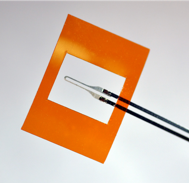
Butt bonded (no overlap) sensing junctions in 0.0005" thick foil provide ideal response. Types K, E and T are available in a choice of foil patterns with ribbon or fiberglass covered leads. Free foil TCs operate <540°C (1000°F) when installed using ceramic cement.
RdF STIKON® sensors are encapsulated in polyimide and conform to the mounting surface. These sensors are low mass, moisture resistant, and feature low-outgassing materials.
All sensors in this category are offered with optional PSA adhesive backing.
In a laboratory or test environment, these sensors can be temporarily adhered, allowing users to remove and re-use them in other locations or experiments.
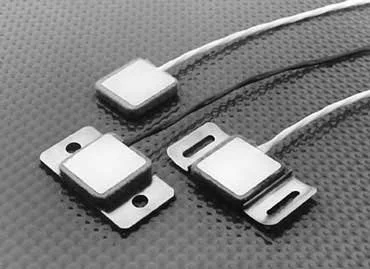
RdF STRAPON® Thermocouples
RdF STRAPON® sensors are offered with optional mounting hardware enabling successful temperature measurement on flat or curved surfaces down to 1" radius.
The stainless steel sensing surface and thermal insulation over the sensor flex for good contact.
Safe for condensing environments.
Heavy Duty Surface Thermocouples
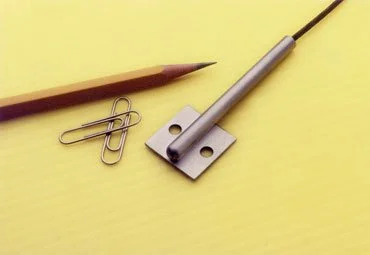
This style is a full range thermocouple probe with a heavy bolt-down or weld-down flange for mounting the probe on a surface.
FM approved for explosion proof use with ANSI types E, J, K or T single or dual junctions and all hardware styles.
Probe Thermocouples & Assemblies
MIL-Spec Thermocouple Probe Assemblies
RdF’s spring-loaded temperature probes are qualified to MIL-T-24388 and QPL-listed. Learn more about our JQ TCEK Thermocouple probe assemblies and compatible accessories.

Series 77: Industrial Thermocouple Probes
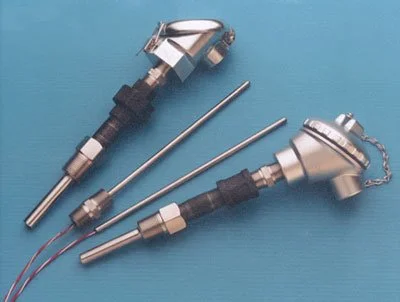
Complete family of full range, special accuracy mineral insulated thermocouples with extra value stranded leads. Choice of diameter and sheath material in ANSI types E, J, K or T single or dual junctions.

Series 78: Explosion Proof Thermocouple Probes
Selected Thermocouples are available now in our webstore:
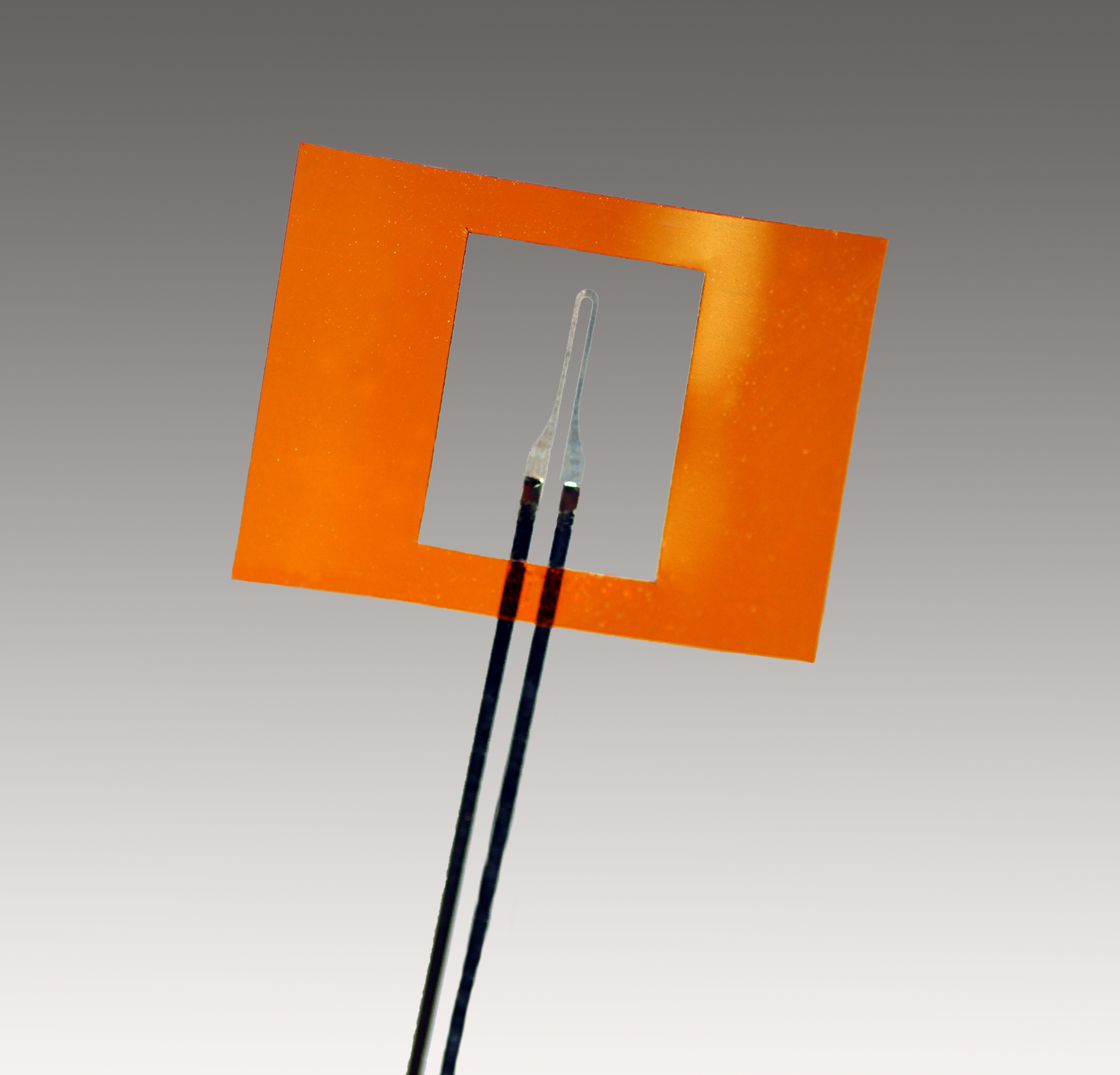
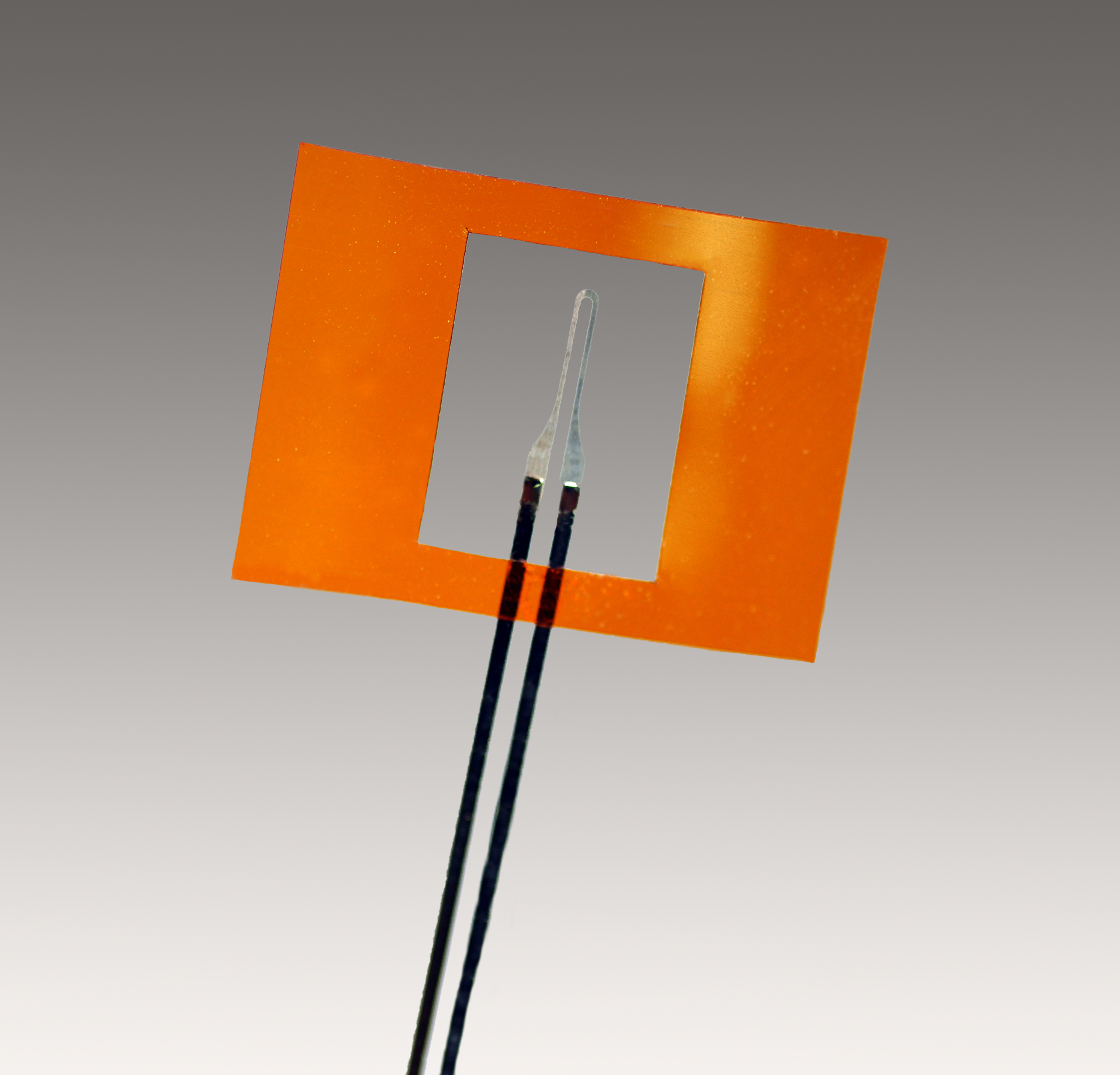
Extremely low mass sensor for precise analytical or experimental measurements. Fast response time. Removable carrier.
THE ALL-TIME PERFORMANCE STANDARD
RdF’s exclusive Micro-Foil® surface thermocouple junctions have been the benchmark design for over 40 years. These practical surface sensors are the ideal high performance configuration for demanding applications.


Extremely low mass sensor for precise analytical or experimental measurements. Fast response time.
THE ALL-TIME PERFORMANCE STANDARD
RdF’s exclusive Micro-Foil® surface thermocouple junctions have been the benchmark design for over 40 years. These practical surface sensors are the ideal high performance configuration for demanding applications.

Low cost, versatile RdF Stikon® thermocouples can be used for a wide variety of surface temperature measurements. The thermocouple is embedded in a paper-thin laminate intended for surface applications. All options are available with added adhesive backing. Please contact us for assistance.
Low Mass
Flexible
Insulated
Fast Response
Rugged Construction
Economical
Flattened Junction